
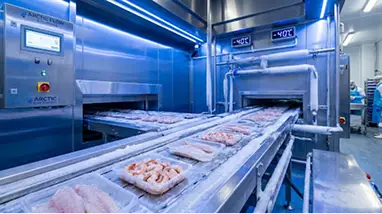
Blast freezing is one of the most important — and least understood — technologies in the cold chain. Unlike conventional freezing, blast freezing rapidly lowers product temperature to lock in freshness, nutritional value, and shelf life. For Kerala’s seafood and poultry sectors, it’s a game-changer.
Conventional slow-freezing forms large ice crystals that rupture cell walls in food products — leading to texture degradation and moisture loss on thawing. Blast freezing operates at high-velocity cold air circulation, dropping product core temperature so rapidly that only micro-crystals form. The result: product that thaws as close to fresh as possible.
For exporters of Kerala’s premium seafood — prawns, fish, cephalopods — blast-frozen product commands higher prices in export markets and meets stringent EU and US food safety import requirements. Westman’s blast freezing capacity of 100 MT per day is designed to handle peak seasonal volumes without bottlenecks.
Whether you’re a seafood processor, poultry supplier, or ready-to-eat food brand, Westman’s blast freezing infrastructure is available on a rental basis. Speak to our team about how we can support your production calendar.